
Gastric Bypass (Laparoscopic) in Iran
Operation: 1 – 2 Hours
Anesthesia:General
Healing:1 – 2 months
Clinic Stay: 1 Day
Total Stay: 9 Day
Back to Work: 14 Days


Our packages include:
Our packages include:


Your Detailed Schedule in Iran
>> Day 1: The representative of Iran Surgery Center is waiting for you at the airport. And transfers you to the hotel. You will meet the doctor on the same day and then perform your tests with our representative.
>> Day 2: Our representative at the hotel is waiting for you to go to the surgery center or hospital together. All arrangements are made by us for surgery. Instructions after surgery will be communicated to you in writing and orally.
>> Day 3: You will return to the hotel with your translator. The doctor’s assistant and translator will start 24 hours a day. A private nurse will be available if needed. Daily light walking and taking postoperative medications begin.
About our hotels and services
During your stay and treatment in Iran, you will not have any worries about accommodation, transportation, translator and anything else. Depending on your taste and needs, VIP or economic services and hotels will be provided for you. Further details will be announced during the application process.



Our Patients Have Something To Tell You
See why people choose us as their facilitator to get their plastic surgery done in Iran.
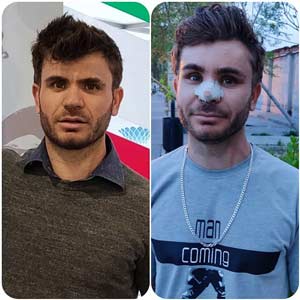




Is Iran the right choice for my Gastric Bypass surgery?
Iran is a vast country with advanced medical facilities and equipment. Skilled and experienced Iranian doctors with experience in thousands of advanced cosmetic and therapeutic surgeries are ready to serve you. Iranian girls are interested in various body and facial surgeries and this has made Iranian doctors very experienced in this field. In addition to using advanced medical facilities, you can enjoy the sights of this ancient country before and after the operation.
Why choose Iran Surgery Center?
At Iran Surgery Center, in cooperation with top Iranian doctors, we provide world-class medical and beauty services. Providing visas, tickets, transportation within the city, reception and escort to the airport, accompanying you in all stages of treatment, surgery, performing tests and imaging before and after surgery are among the services of Iran Surgical Center.


How will my surgery go at Iran Surgery Center?
The surgical procedure in Iran Surgical Center is very simple. In the first step, you contact us through one of the online communication methods (WhatsApp, Instagram, email, Facebook, etc.). We will do the rest for you. Our experts will review your basic information and requirements. They may ask you for a photo of the area you want to do to choose the right surgeon or to announce the price more accurately, or they may ask for your medical records for medical surgeries. In the following, we take all the necessary measures for a quiet and comfortable surgery.
Why choose Iran for cosmetic surgery?
cosmetic surgery is very popular in Iran and Iranian girls are very interested in various types of cosmetic surgery and cosmetic services . Iran is known as the ‘nose job capital of the world’ because of the high rate of the procedure. With highly-trained facial and body surgeons and very affordable costs, Iran is a hot destination for all cosmetic surgery candidates from all around the world.

Gastric Bypass(Laparoscopic) in Iran all you need to know
First of all, let’s check if weight loss or liposuction is right for you?
Calculate your body mass index. If your BMI is above 40, you are a perfect case for bariatric surgery. If your BMI is between 35 and 40, you are a suitable case for obesity surgery, but consult your doctor for a more definite opinion. For BMI below 35, liposuction and body contouring can be a suitable option for you.
BMI
Gastric bypass operation step by step
First, 5 small holes are made in the abdomen to insert surgical instruments (laparoscopic procedure)

- The stomach is examined and the surrounding arteries are separated from the stomach
- The upper part of the stomach is separated by a volume of 50 cc and a new small stomach is made (pouch)
- The lower part of the intestine is cut to reconnect the gastrointestinal tract and connect to the pouch
- Finally, the lower part of the intestine (A) is connected to pouch and the upper part of the incised intestine (B) is sewn to the lower part of the intestine.
In this method of bariatric surgery, most of the stomach and the beginning of the small intestine are removed from the food path (reduced absorption)

Diseases that can be treated with bypass surgery:
Extensive studies have shown that gastric bypass surgery improves or treats many obesity-related diseases, such as:
Type 2 diabetes: Numerous studies have shown that 80% to 60% of patients with type 2 diabetes will recover after gastric sleeve surgery , blood pressure, Fatty Liver, High cholesterol, Sleep apnea, Reduce cancer rates, Polycystic ovary (PCO), Asthma, Migraine,
joint’s pain, Depression and psychiatric problems, Infertility, Low testosterone levels: Slioma action naturally increases testosterone levels, urinary incontinence, Gout and etc.
Mechanisms of weight loss in gastric bypass:
- Reduce food intake in the new stomach (pouch)
- Decreased absorption of nutrients and calories from the small intestine
- Changes in gut hormones that help you feel fuller longer and suppress appetite and reverse the symptoms of metabolic syndrome caused by obesity.
Nutrition after gastric bypass:
- 1 day later: water, tea and filtered liquids
- Week 1: Water, tea, juice, yogurt, milk and buttermilk
- Week 2: Soup Mix
- Week 3: Puree
- Week 4: Soft food
1 month after gastric bypass surgery, you can start the table diet with the following conditions:
- Eat with a small spoon or fork (small amount)
- Chew well
- Pay attention to the size of the new stomach
- Drink plenty of water
- Take supplements and vitamins regularly
Mini-Bypass surgery
In fact, gastric mini-bypass surgery is a simplified form of the classic gastric bypass surgery, but contrary to its name, the most weight loss is seen in this operation.
The important point is that gastric mini-bypass surgery, contrary to its name (mini !!), causes the most weight loss in obesity surgeries due to its high absorption. Therefore, it is preferable to perform this operation more for people who They have a body mass above 45 to choose from.

Benefits of Mini Gastric Bypass:
- This procedure usually takes less than an hour
- One night hospital stay
- Proper weight loss
- Good improvement in the complications of obesity such as diabetes, high blood pressure
- Very few surgical complications
- Return to daily activities and work (maximum one week rest)
Comparison of mini gastric bypass surgery with classic gastric bypass:
- More weight loss than classic bypass
- Shorter surgery time than classic bypass
- Surgery costs less than classic bypass
- Improves diabetes, blood pressure… .. Better than classic bypass
- Gallbladder reflux is more likely in gastric mini-bypass than in classic bypass
Possible complications of gastric mini-bypass surgery:
Leakage from staple line – This is a very rare but important complication. Various articles have reported leakage rates between 0.5 and 3%. To further reduce this complication, we in Iran Surgery Center have a great plan and accuracy in our patients so that we have the least complication in gastric bypass and gastric bypass surgery. This protocol includes:
- Careful examination of the patient before surgery
- Preoperative preoperative counseling
- Treatment of lung and heart diseases before surgery
- Accurate surgical technique during surgery
- Operation time leak test
- Endoscopy at the end of the operation
Deficiency of vitamins – the need for regular and lifelong consumption (vitamin deficiency is more than the classic bypass and gastric sleeve because the amount of bypassed intestine is higher)
Weight Regain -After 1 to 2 years, a slight weight gain occurs in most people and with any operation (gastric sleeve, gastric bypass, mini gastric bypass,…) that is nothing to worry about. Only about 10 to 20% of patients may be significantly overweight.
After 5 years, most centers around the world have reported that most patients have been able to maintain their weight loss during this time.
Sagging skin or sagging skin after gastric bypass – Due to the fact that patients who are candidates for mini-bypass surgery are generally overweight and experience more weight loss, for example 50 to 60 kg, the skin is more likely to sag in these people .After the weight is fixed, we can return the freshness of your skin to you, with abdominoplasty, breast lift ,butt lift and arm lift at Iran Surgery Center.
Clots in the legs or lungs (pulmonary embolism) – very rare
Dumping syndrome
Complications such as intestinal obstruction and internal hernias, which may rarely be seen in classical bypass, are generally not seen in gastric mini-bypass.
In Iran Surgery Center, many of these complications are minimized with regular patient support after gastric mini-bypass surgery by the surgeon.
Important points about Bypass
20. 20% of patients are transferred to the ICU after surgery.
90% of patients are discharged after one night of hospitalization (the day after surgery); even ICU patients (such as gastric sleeve and classic gastric bypass)
In gastric bypass surgery, a urinary catheter (Foley catheter) is not inserted.
– In patients after gastric mini-bypass surgery, no drain is placed.
All patients are encouraged to walk 3 hours after entering the ward or ICU.
In general, postoperative pain is well controlled and most patients need less painkillers than prescribed.
There is no need for a pain pump at all.
Most patients return to school or work 1 week later.
In the first 2 to 4 weeks, weakness and fatigue are normal, but by changing the diet to puree after the second week, the body gradually adapts and the energy level returns to the previous level.
– 4 to 6 weeks after surgery you can exercise.
Exercise greatly increases your energy level.
gastric bypass or gastric sleeve?
While gastric bypass surgery is considered the gold standard in bariatric surgery, in recent years gastric sleeve surgery has become the most popular and common bariatric surgery in Iran, the United States and around the world. Because:
Technically, gastric sleeve surgery is easier than bypass surgery. The length of gastric sleeve surgery is about half that of gastric bypass.
Gastric sleeve is much less likely to be malnourished and vitamin deficient than gastric bypass. There is no malabsorption in gastric sleeve.
Long-term complications of gastric bypass are greater than sleeve. For example, in gastric bypass, there is a possibility of intestinal obstruction, marginal gastric ulcers and internal hernia, while this possibility is not present in gastric sleeve.
Favorite of doctors in other groups (especially gastroenterologists)

Leave A Comment